

- 21 September 2026|
- Windows
Somewhere in the process of choosing new windows, the question of double or triple glazing comes up. Cost, performance, whether the extra pane is worth having at all: it is a reasonable thing to weigh up, and the answer is less obvious than it first appears.
At Enhance, our casement windows can be triple glazed, and so can our bifold doors. Which option is right for you depends on the property, how it is heated, and what you want the windows to do.
This guide sets out how each one works, what actually makes a difference to performance, and how to tell whether triple glazing is worth the extra on your house.
What actually sits inside a sealed unit
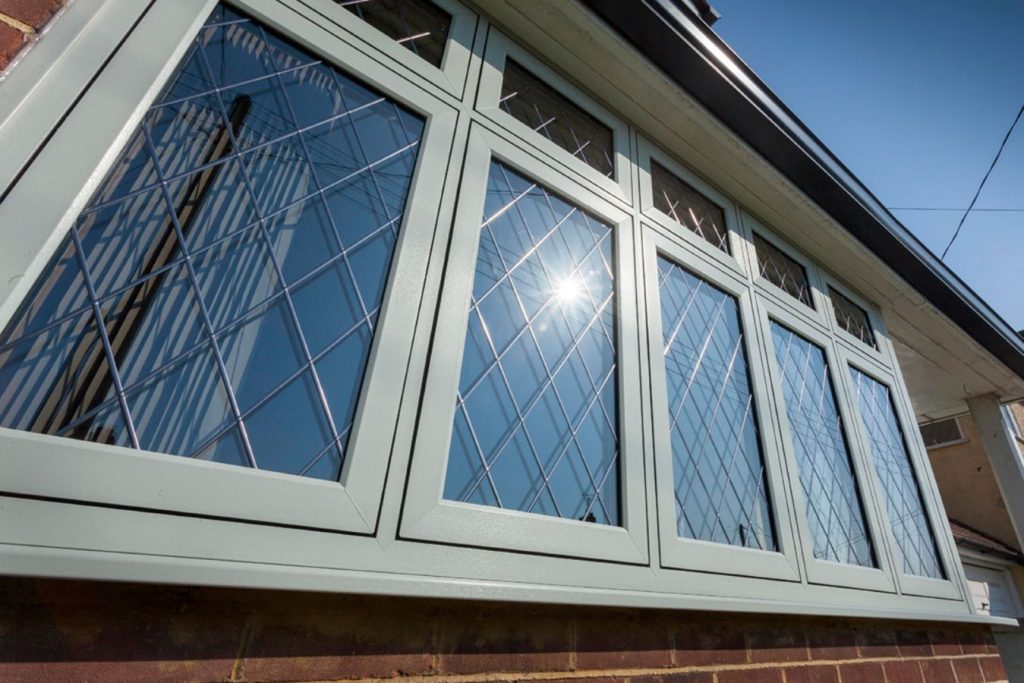
A sealed unit is the glazed panel that sits inside the frame of a window or a door. It is the part you look through. A double glazed unit has two panes of glass. A triple glazed unit has three.
The panes are held apart by a spacer bar around the edge, and the gap between them is filled with gas rather than ordinary air. Argon is the usual choice. It is a harmless, colourless gas, and the reason it is used is simple: it carries heat across the gap more slowly than air does, so less warmth escapes from the room.
That gap between the panes is where most of the insulation happens. The glass itself is a relatively poor insulator. The trapped gas is what slows heat moving from the warm side to the cold side, and how wide that gap is turns out to matter enormously.
How glazing performance is measured
One term is worth getting straight before we compare anything: the U-value.
A U-value measures how much heat escapes through the glazing. The lower the number, the less heat you lose, and the better the window or door performs. A unit rated 0.8 is better than one rated 1.4.
Why the number of panes is only half the story
The gap between the panes has an ideal width, and it is around 16mm.
Make it narrower and the two panes sit close enough that heat passes between them more readily. Make it wider and the gas starts to move around inside the gap, circulating warmth from the inner pane across to the outer one. At roughly 16mm, both problems are at their smallest.
This is where the standard sizes become important. The industry standard double glazed unit is 28mm thick: a 4mm pane of glass, a 20mm gas-filled gap, and a second 4mm pane. Figures published by the Building Research Establishment, an independent organisation that has tested the performance of building products in the UK for decades, put that construction at a U-value of around 1.1 W/m2K.
Now add a third pane while keeping the unit at 28mm. The make-up becomes 4-8-4-8-4: three panes of glass and two gaps of just 8mm each. Both gaps are now far below the ideal width, and the same research puts that unit at around 1.2 W/m2K.
A worse result than the double glazed unit, from a window with an extra pane of glass in it.
To get the benefit of a third pane, the unit has to grow so the gaps can widen:
| Sealed unit | Make-up | Approximate centre pane U-value |
| 28mm double | 4-20-4 | 1.1 W/m2K |
| 28mm triple | 4-8-4-8-4 | 1.0 to 1.2 W/m2K |
| 36mm triple | 4-12-4-12-4 | 0.8 W/m2K |
| 44mm triple | 4-16-4-16-4 | 0.6 to 0.9 W/m2K |
At 36mm, with two 12mm gaps, a triple glazed unit pulls clearly ahead. At 44mm, with two 16mm gaps sitting right at the ideal width, it is performing about as well as a conventional triple glazed unit can.
Exact figures shift depending on the coating applied to the glass, which is why published numbers vary between suppliers. The pattern holds regardless.
The frame is the constraint
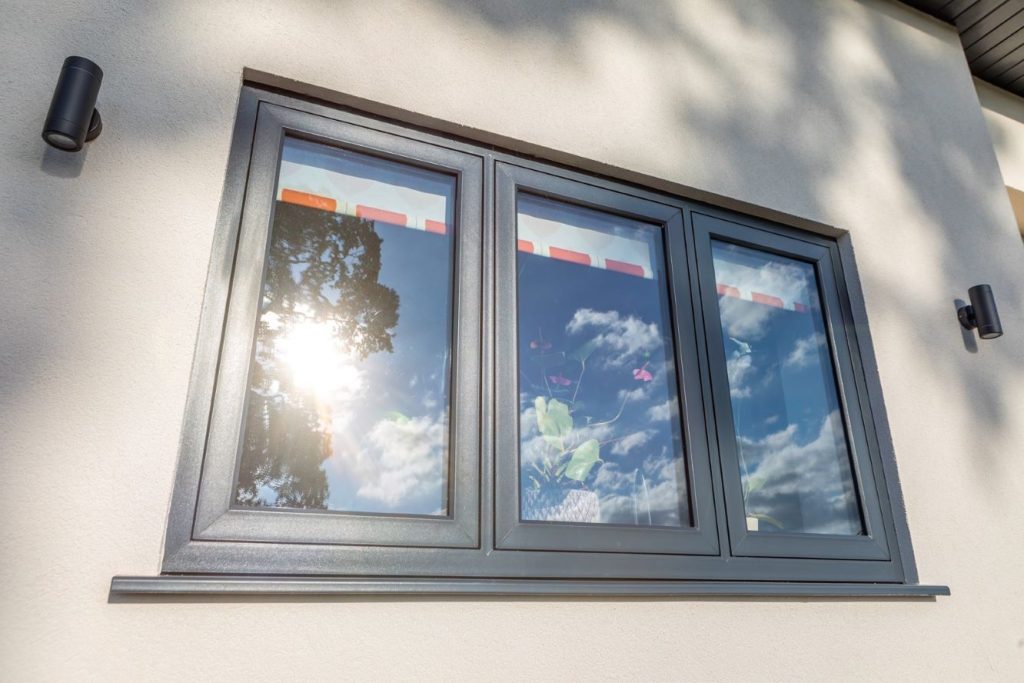
Every frame, whether it is a window or a door, has a recess that the glazed unit sits into. It is built to a set depth, and that depth decides how thick a unit the frame can physically hold. A frame designed around a 28mm unit will not accept a 44mm one. The glass simply will not fit, and no amount of specifying better glazing changes that.
This is why triple glazing has usually meant new frames as well as new glass. It is also why you should treat any quote offering triple glazing in a standard 28mm frame with some care, and ask what the unit make-up actually is and what U-value it achieves. If the answer is a 28mm argon-filled triple, you are paying more for a third pane that is not earning its place.
Our own casement frames use the Optima system, which is 70mm deep and built to hold a triple glazed unit at the thickness it needs to be. So if you are having new windows fitted by us, this is not a limitation you run into. You choose double or triple, and the frame accommodates either.
Triple glazing makes the strongest case in a few specific situations:
- Homes with a heat pump. Heat pumps run at lower flow temperatures than a gas boiler, which makes the building’s heat retention more important. Every improvement in U-value contributes more than it would with a conventional system.
- Large glazed areas. Where glazing makes up a big proportion of a wall, or in a conservatory, orangery or glass extension, the glazing specification drives the comfort of the space.
- Well insulated properties. New builds and full refurbishments where walls, floor and roof are already dealt with.
- Rooms that never warm up. North facing rooms with no solar gain, and any room where you can feel the cold coming off the window.
Noise reduction
Both double and triple glazing reduce noise compared with single glazing, but the number of panes is not the main factor, and this is where a lot of money gets spent in the wrong place.
Sound reduction comes from disrupting the sound wave, and the most effective way to do that is with panes of different thicknesses and an acoustic laminated pane with a sound dampening interlayer. A double glazed unit built that way will outperform a basic triple glazed unit on noise.
So if noise is your main reason for changing the windows, the conversation to have is about glass specification rather than pane count. Asymmetric thicknesses and acoustic laminated glass will do more for you than a third pane.
Cost, and whether the extra spend returns
Triple glazing costs more. The unit is more expensive to manufacture, and if the frames need changing to accept a thicker unit, that cost sits on top.
In the UK climate, the additional annual saving from triple glazing over well specified double glazing is real but modest, which means the payback period on the extra spend is long. For a typical home with a gas boiler and reasonable insulation, good double glazing is usually the better financial decision.
What we fit
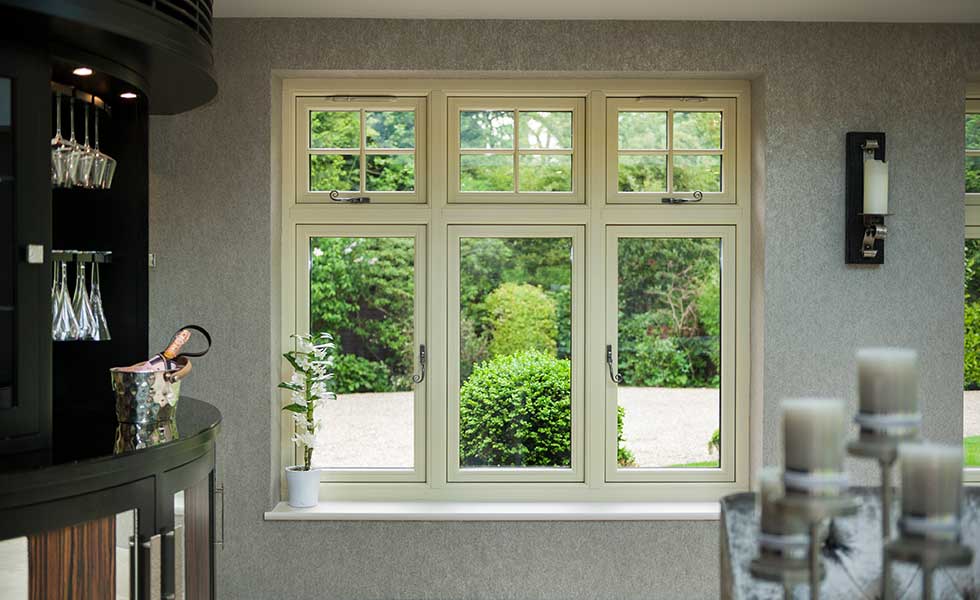
Our casement windows are available with either double or triple glazing, in both stormproof and flush casement construction. Stormproof casements come in a choice of chamfered or sculptured frame shapes.
Our aluminium bifold doors can also be specified double or triple glazed, with published U-values of 1.4 W/m2K double glazed and 1.0 W/m2K triple glazed.
Every unit is made to order, and every installation is surveyed before anything is manufactured, so the specification is matched to the property rather than picked from a list.
Still not sure?
We hope this guide has been useful and pointed you in the right direction. There is a fair bit to take in, and sometimes it is easier to talk it through in person.
Several of our products can be upgraded to triple glazing, including our casement windows and aluminium bifold doors, and double glazing comes as standard across the whole range.
If you would like to discuss whether double or triple glazing is right for you and your home, get in touch or pop into one of our showrooms in Benton, Cramlington or Birtley. We are happy to talk it through, and finance options are available.