

- 17 January 2026|
- Conservatories
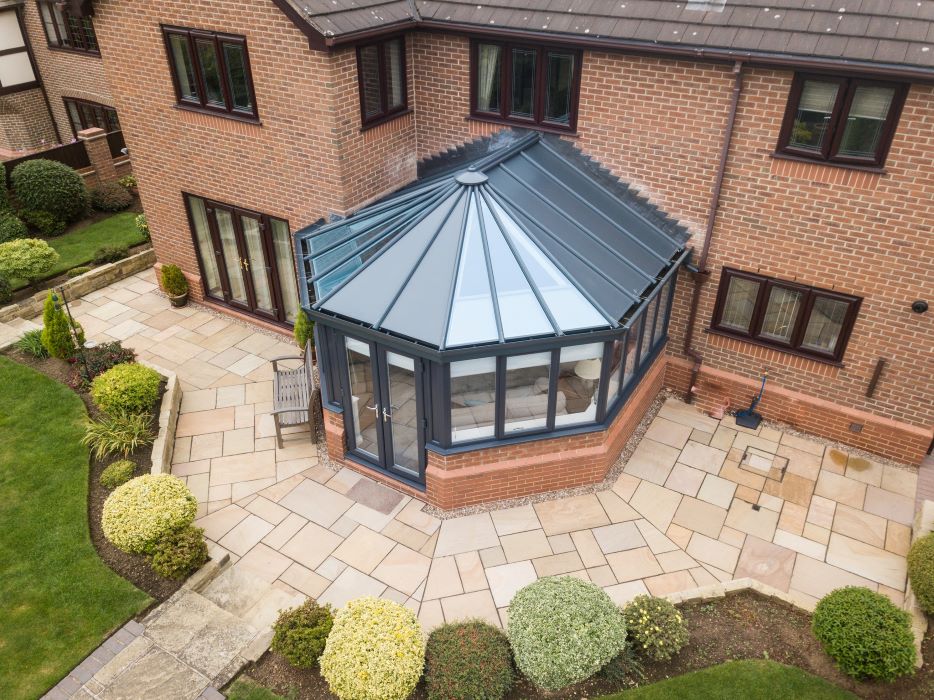
For many North East homeowners looking to expand their living space, the journey often starts with a simple question: should I build a conservatory or a full house extension?
The line between a modern conservatory and a dedicated house extension has become increasingly blurred in recent years. Today, both can feature a solid roof, high-performance glazing and superb thermal efficiency. This means the key differences are no longer just about the amount of glass used, but about legal structure and function.
The short answer to when does a conservatory become an extension is this: a conservatory transitions into a house extension the moment it is fully integrated into the main house and designed to meet the rigorous standards of UK building regulations.
This distinction is critical for your home improvement project, as it dictates the required insulation, heating, paperwork, cost and time. Understanding these key differences will help you make the right choice for adding valuable new space to your home.
The technical answer: Building regulations and insulation
The most crucial difference between a traditional conservatory and a house extension lies in their legal status. This status determines the construction materials and the insulation standards required.
The traditional conservatory exemption
Historically, a regular conservatory benefited from certain exemptions, meaning it often did not require a full planning application or adherence to building regulations – a concept often referred to as permitted development or permitted development rights.
To qualify for these exemptions, a conservatory generally had to meet four main criteria:
- It must be separated from the main house by external-quality doors, such as French or patio doors.
- It must have its own independent heating system (not connected to the home’s central heating).
- It must have a translucent roof, historically a polycarbonate roof or a glass roof.
- It must not exceed a certain size limit (often 30 square metres internally, though rules vary).
While this offered an easy route to gaining a sunroom or garden room, in the past the major disadvantages were poor thermal performance and limited usability. Without proper insulation or heating integration, the glass structure acted as a passive space, often too cold in winter or too hot in summer, although it should be noted that modern contemporary conservatories now no longer suffer from these problems.
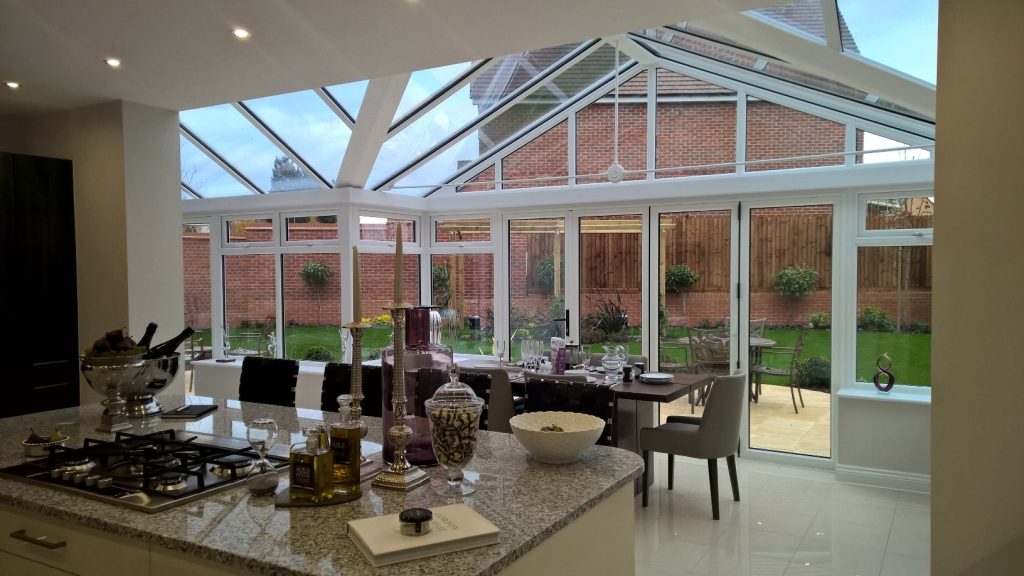
When a conservatory becomes an extension
A house extension is legally defined as a permanent addition to the main house that complies with all current building regulations.
A conservatory becomes an extension when you remove the separating doors and integrate the heating system, treating the new room as a standard internal living area.
Because this fully integrated new space is heated and open to the rest of the house, it must meet specific thermal efficiency standards to limit energy bills and prevent undue heat loss. This requires:
- Solid walls built using brick and mortar construction.
- A fully insulated solid roof (often a tiled roof).
- High-performance glazing, such as solar control glass or high-spec double glazing.
This commitment to compliance ensures the durability and year-round usability of your new extension. Our professional team manages this entire process, handling all required development rights and building regulations paperwork to give you peace of mind.
The design difference: Structure and functionality
The increasing demand from homeowners for year-round comfort has led to the rise of several structures that bridge the gap between a light conservatory and a full brick extension: modern conservatories and orangeries.
What about orangeries?
Orangeries are often seen as the perfect middle ground. While a regular conservatory features a high percentage of glass walls and a full glass structure, an orangery incorporates more solid wall construction – sometimes up to 75%.
Orangeries usually feature a solid perimeter roof with a striking central roof lantern. This allows for plenty of natural light to flood the new space while still offering better insulation and the interior feel of a permanent room, often making them ideal for a dining room or spacious living area.
The true house extension
A house extension, particularly a modern glazed extension, offers maximum versatility and functionality. It is built specifically to feel and function as part of the main house. The construction of extensions involves deeper foundations and highly engineered construction materials to match the existing structure, including specific choices in colour and finish.
The ideal design allows for a variety of purposes, from a kitchen extension to a dedicated relaxation space, all with guaranteed thermal efficiency.
| Feature | Regular Conservatory | Orangery | Modern Glazed Extension |
| Regulation | Exempt (Must be separated) | Compliance often needed | Full Building Regulations |
| Roof Type | Full Glass | Solid Perimeter with Roof Lantern | Fully Tiled or Glazed/Tiled Combo |
| Wall Type | Mostly uPVC/Glazing | Substantial Solid Walls | Fully Insulated Solid Walls |
| Thermal Efficiency | Good | Very good | Excellent (Meets required UK standards) |
What is the key difference between an orangery and a modern extension?
The primary distinction is regulatory and structural. While both an orangery and a modern extension often feature a tiled roof element and solid construction, a modern extension is engineered specifically to meet all building regulations necessary to be fully open to the main house, ensuring superior year-round usability and thermal efficiency.
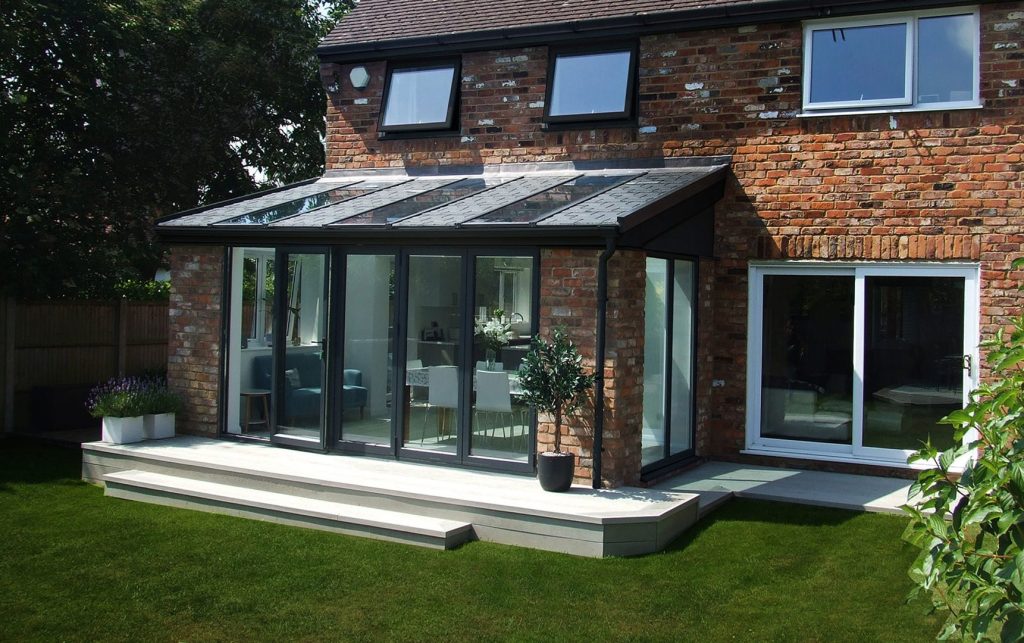
Achieving the ideal design for your north east home
For homeowners in the North East, choosing the right structure is vital for ensuring comfort during our sometimes unpredictable weather. You need a space that will stay warm in winter, which means focusing on high quality insulation and glazing.
Customisation options for comfort
When designing your new living area, look for structures that guarantee thermal performance. Our modern glazed extensions utilise the latest solar control glass and can be specified with features like underfloor heating and superior ventilation to ensure the best possible comfort and energy efficiency.
A properly designed extension is much more than just a large type of conservatory – it’s a permanent addition that significantly increases the value of your property. In fact, a quality single-storey extension can add between 10% and 15% to the value of a typical UK home, proving it is an excellent long-term investment.
Our team is dedicated to providing expertise and guidance. We offer various styles and customisation options, from contemporary glass structures to traditional tiled roof extensions, ensuring we achieve the perfect solution for your home improvement project.
The process of moving from a dream to a reality is simpler than you think. Our professional team handles all the complex paperwork and the construction of extensions, allowing you to focus on how you will use your new room.
We invite you to discover how a bespoke, fully compliant modern glazed extension could transform your home.
Get in touch with us for a free, no-obligation design consultation. Simply complete our contact form today to discuss your vision and let us guide you through the process of creating the ideal living space.